
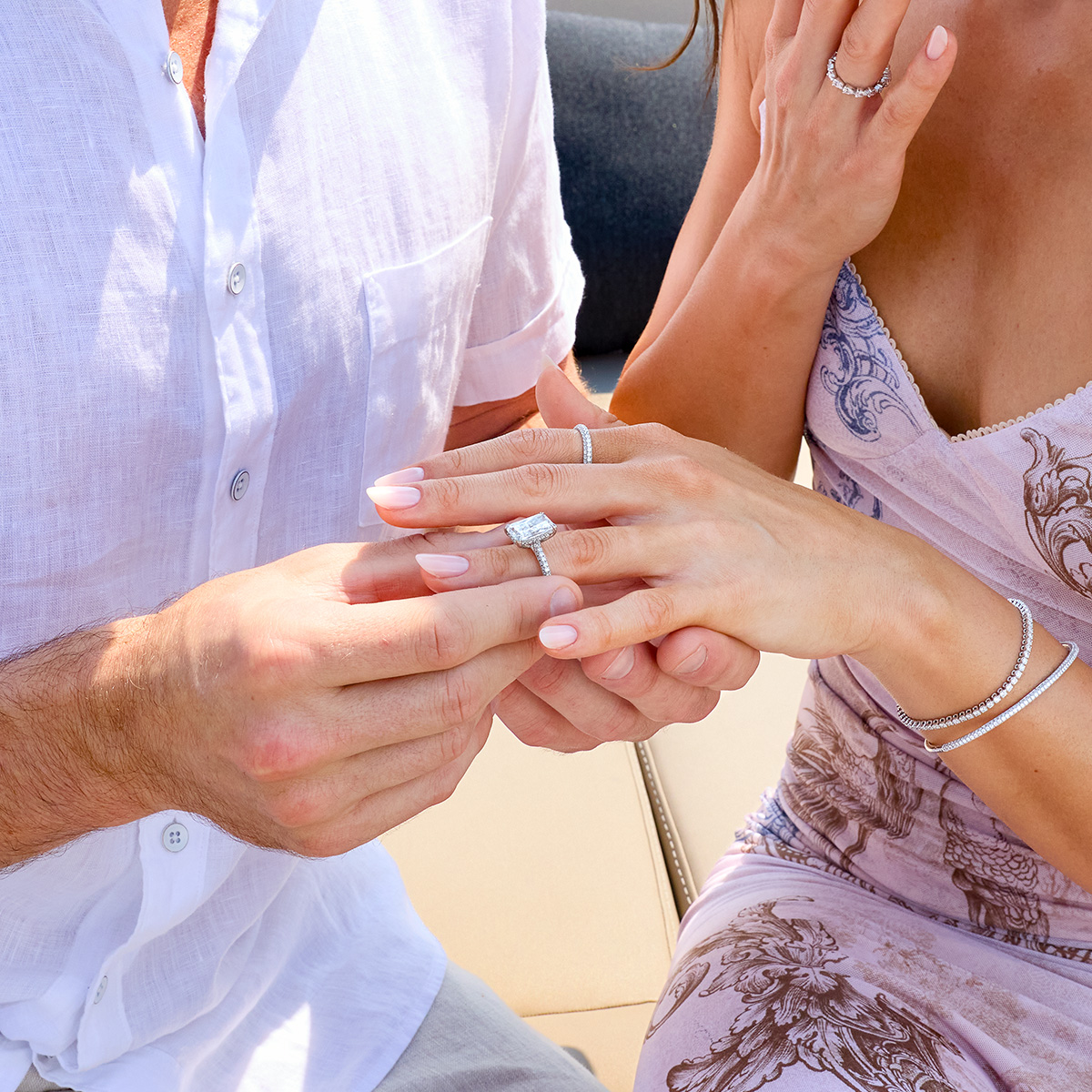
A princess cut and a square cushion can look surprisingly similar in a small product photo. Put them side by side, and the differences become clearer: the princess has pointed corners and straight sides, while the cushion has a more rounded outline. An emerald cut adds another choice, with long, stepped facets that reflect light differently from either.
Choosing between them gets easier when you separate two things: the outline you like and the pattern of light you enjoy. Those preferences can lead to different answers, which is why seeing the actual diamonds matters more than choosing from shape names alone.
Princess: A Square Outline With Defined Corners
A princess cut is usually square, with straight sides, and pointed corners. A princess-cut diamond ring suits someone who likes a geometric outline along with numerous smaller reflections as the diamond moves.
Choose the setting according to how much detail you like. A polished solitaire band gives the ring a straightforward, geometric look, while pavé adds diamonds along the band. For a bolder design, a square halo can emphasize the princess cut’s angular character and add coverage around the center.
Pay attention to how the corners are secured. V-shaped prongs wrap around the points, while a bezel surrounds the diamond with a metal rim. Both offer ways to protect the corners, with noticeably different finishes: prongs leave more of the diamond’s edges visible, while a bezel makes the metal border part of the design.
Emerald: Straight Lines and Broader Flashes of Light
An emerald cut is typically rectangular with cropped corners. An emerald-cut diamond ring has a sophisticated, understated look that can still feel glamorous. The shape continues to attract attention in both classic solitaires and updated three-stone designs.
Its signature feature is the hall-of-mirrors effect. Long, stepped facets create reflections that seem to repeat within the diamond as you turn it. This gives the emerald cut a quieter play of light than the many small flashes of a brilliant-style cut, making it appealing to someone who enjoys clean lines and restrained elegance.
When buying, look for a diamond that appears clear to your eye. The broad facets can make internal marks easier to notice, particularly near the center. Ask to compare several diamonds without magnification, using their clarity grades as a guide rather than choosing from the report alone.
Try different proportions, too. A slender rectangle gives the ring a longer outline, while a shorter, wider emerald cut has a more substantial rectangular shape. Compare both in a similar setting so you can decide which version suits your taste.
Cushion: Rounded Corners With Plenty of Variation
A cushion cut has a square or rectangular outline with rounded corners and gently curved sides. A cushion-cut diamond ring is worth considering if you like the overall proportions of a square or rectangle.
You can choose a classic square cushion or an elongated cushion with a longer, rectangular outline, both with rounded corners. Cutting style adds another choice. A modern cushion modified brilliant uses additional facets that can create a finer pattern of reflections, while an old mine cut offers an antique look with chunkier facets and broader flashes of light. Compare examples in motion to decide whether you prefer modern brilliance or vintage character alongside your chosen shape.
Their light patterns vary as well. Some show larger, more individually recognizable reflections; others have a finer, more closely broken-up pattern. Ask to see several examples in motion rather than assuming one cushion represents the whole category.
A solitaire setting keeps the cushion’s rounded outline as the main feature, making it a good choice for someone who prefers a simple ring. A halo adds brilliance and fuller diamond coverage around the center for a more dramatic look. For an old mine cut, vintage-inspired details such as milgrain or engraved shoulders can complement its antique character.
A Few Checks Before You Choose
Compare the diamonds’ length and width alongside carat weight, which measures weight rather than visible size. For emerald and elongated cushion cuts, try different proportions to see whether you prefer a slender rectangle or a broader outline.
View your favorites in indirect daylight and ordinary indoor lighting. In softer light, look for overall brightness and clearly defined reflections; under spot lighting, watch for flashes of color as you tilt the diamond. Expect different effects: emerald cuts show broad, mirror-like reflections, while princess and many modern cushion cuts produce more numerous, smaller flashes.
If you already know your preferred setting, compare the diamonds in that style. Then try the finished ring beside a wedding band, checking whether you like the gap, how the settings meet, and whether the combined width feels comfortable. A contoured band may fit around the center setting more closely than a straight one.
Find the Combination That Holds Your Attention
With Clarity’s ring-building options let you explore princess, emerald, and cushion diamonds with your preferred setting and metal. Comparing those combinations can help you see which design best reflects the jewelry you enjoy wearing.
You may be drawn to the princess cut’s sharp geometry, the emerald cut’s understated glamour, or the cushion’s rounded shape and choice of modern or vintage character. Use that preference to narrow your search, then compare individual diamonds before deciding. The finished ring should feel like a natural expression of your taste.